The $401M First Year: What DTC Founders Can Learn From Medvi's Wild Rise
A case study in aggressive growth, AI-powered marketing, and the line between bold and reckless

A note before we dive in: This article is not endorsing or recommending Medvi's tactics. Many of them are controversial, legally questionable, and in some cases — alleged to be outright deceptive. What we are doing is pulling back the curtain on how a single person used modern tools to scale at a speed nobody thought was possible. Your job as a founder is to find the legal and ethical version of what these tactics have to teach.
The Backstory: A Guy, a Laptop, and $20,000
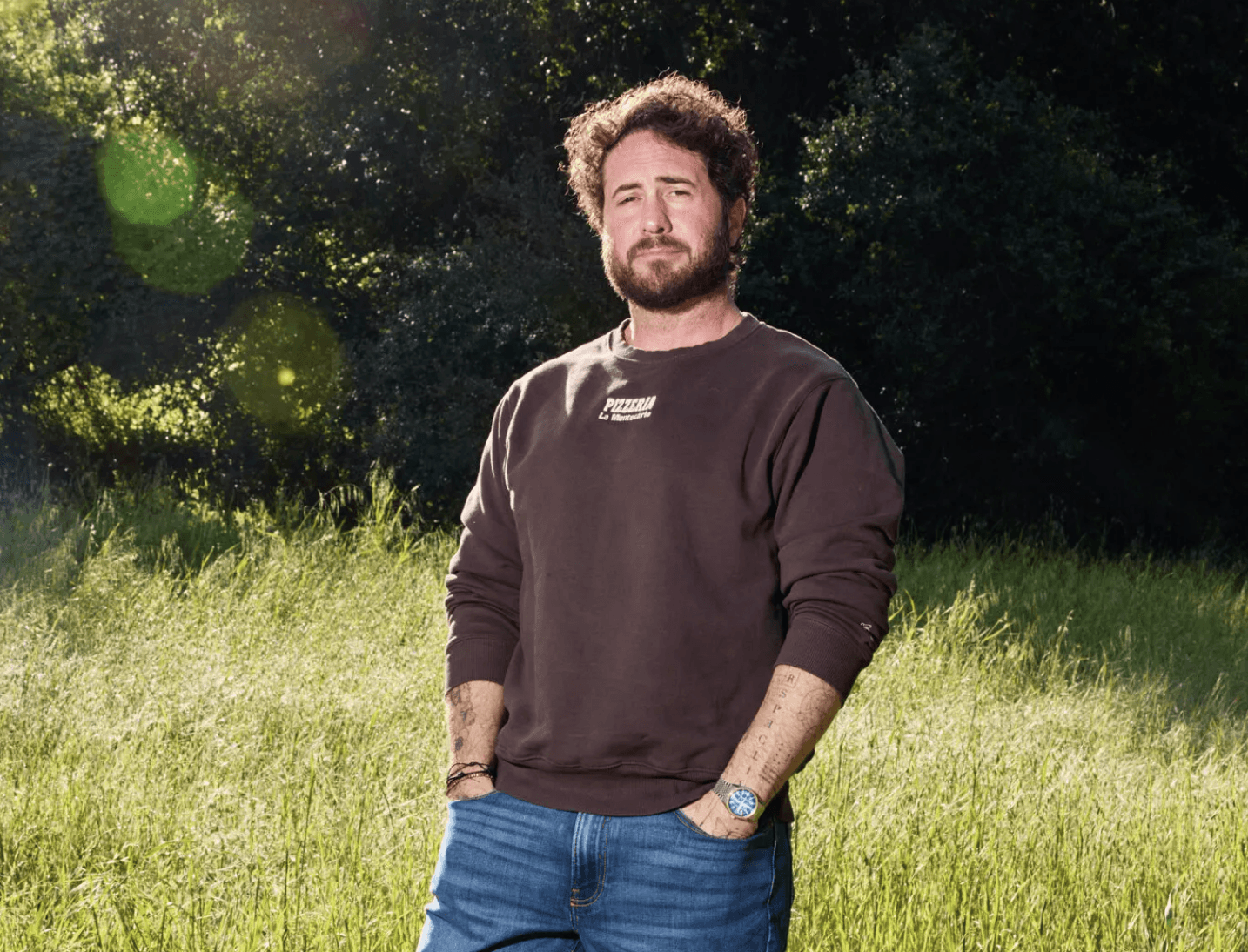
Let's start with a number that's almost hard to type with a straight face: $401,000,000.
That's how much revenue Matthew Gallagher's company, Medvi, made in its very first full year in business — 2025. And in 2026? They're on track for $1.8 billion.
Here's the kicker. He started with $20,000. He worked from his house in Los Angeles. And for most of that time, his only employee was his younger brother, Elliot — hired mainly to filter emails so Matthew could stay focused.
Oh, and Matthew? He grew up in a trailer park.
When the New York Times broke the story on April 2, 2026, the internet went absolutely wild. Founders, investors, and tech commentators couldn't stop talking about it. Sam Altman had famously predicted that AI would make a one-person billion-dollar company possible — and here it was, staring everyone in the face.
But almost immediately, a second story started coming out. And it wasn't pretty.
This is the full story. The good, the brilliant, and the deeply questionable.
So What Even Is Medvi?
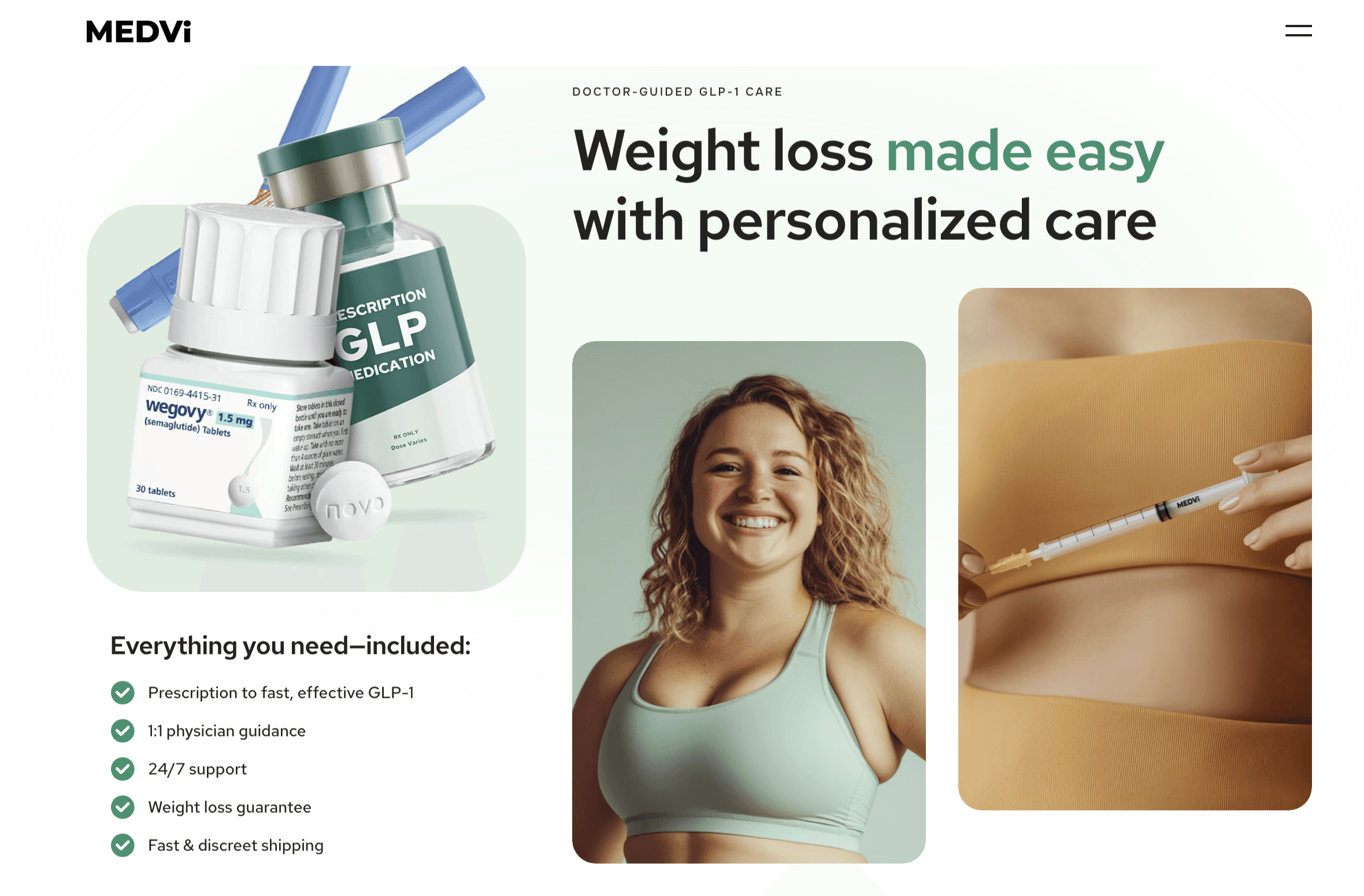
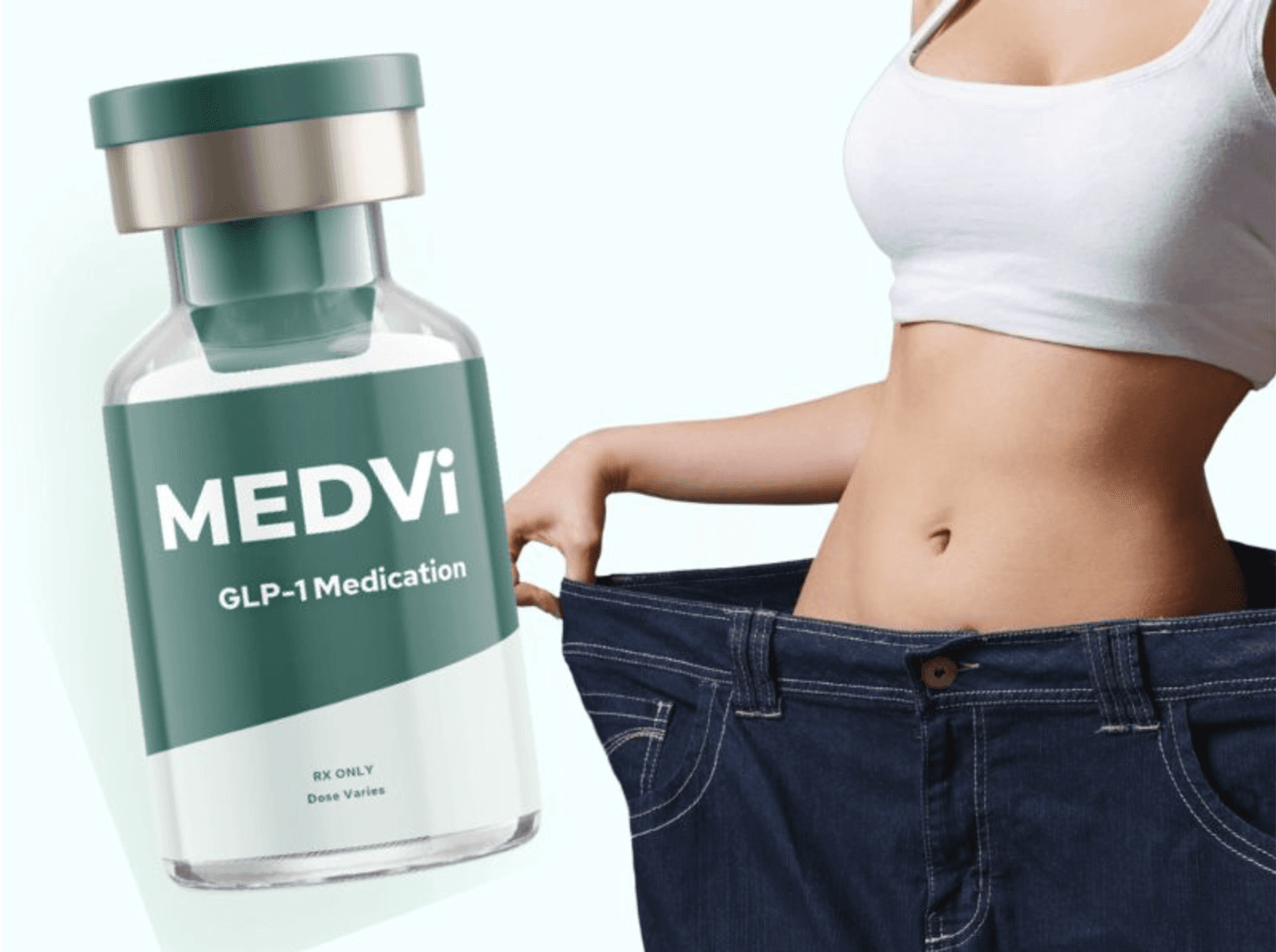
Medvi is a telehealth company that sells GLP-1 weight-loss medications — the same category as Ozempic and Wegovy — along with other compounded drugs. GLP-1s are one of the hottest health trends of the decade, with millions of people looking for affordable access to these treatments.
Here's the key thing to understand about how Medvi actually works: Medvi doesn't make any drugs. It doesn't employ any doctors. It doesn't run any pharmacies.
What it does is own the marketing and customer acquisition layer. Everything else — the doctors, prescriptions, pharmacy fulfillment, compliance, and shipping — is outsourced to two companies: CareValidate and OpenLoop Health.
Gallagher built a wrapper. A brilliant, fast-moving, aggressively marketed wrapper. And that wrapper generated $401 million in year one.
Founder Insight: The Power of Identifying Your True Product
Most founders think their product is the thing they sell. Gallagher figured out that his real product was the path to purchase — the customer experience from first ad click to completed checkout. Everything else was infrastructure. Ask yourself: what is the one part of your business that no one else could do better than you? That's your real product. Everything else is a candidate for outsourcing.
The Numbers at a Glance
Metric | Figure |
|---|---|
Starting capital | $20,000 |
Year 1 revenue (2025) | $401 million |
Projected 2026 revenue | $1.8 billion |
Full-time employees | 2 (Matthew + brother Elliot) |
Estimated customers | 500,000+ |
Month 1 customers | 300 |
Month 2 customers | 1,000+ |
Reported net margin | ~16.2% |
The Marketing Machine: How He Actually Did It
This is where it gets fascinating — and complicated. Let's break down exactly what Gallagher and his team built, layer by layer.
1. He Replaced a $1M+ Team With AI Tools
Before Medvi, a startup like this would have needed web developers, copywriters, designers, video editors, customer service reps, and data analysts. That's easily $1 million or more per year in salaries before you've acquired a single customer.
Gallagher blew that model up.
He used ChatGPT, Claude, and Grok to write website copy, handle customer service, and analyze business performance. He used Midjourney and Runway to generate images and videos for ads. He used ElevenLabs for AI voice content. His entire tech stack was built on Replit, with forms powered by Fillout.
A solo founder's AI stack like this costs roughly $3,000 to $12,000 per year — compared to $130,000+ for equivalent human hires.
Founder Playbook: Build Your AI Operating System
Before you hire your next team member, ask whether an AI tool can do 80% of that role first. Here's how to think about it:
Copy & content → ChatGPT or Claude for first drafts, headlines, email sequences, and product descriptions
Ad creative → Stirling for image ads; Runway or Kling for short video ads
Customer service → Train a GPT-4-powered bot on your FAQs and order data before hiring a support rep
Analytics → Use Claude or ChatGPT to interpret your Shopify or Google Analytics data in plain English
Code & website → Replit or Cursor for simple builds; v0 by Vercel for UI components
You're not replacing human thinking with AI. You're removing the cost and time barrier between an idea and its execution. The founder who ships a tested landing page in an afternoon beats the one still briefing an agency three weeks later.
2. He Went All-In on Paid Social
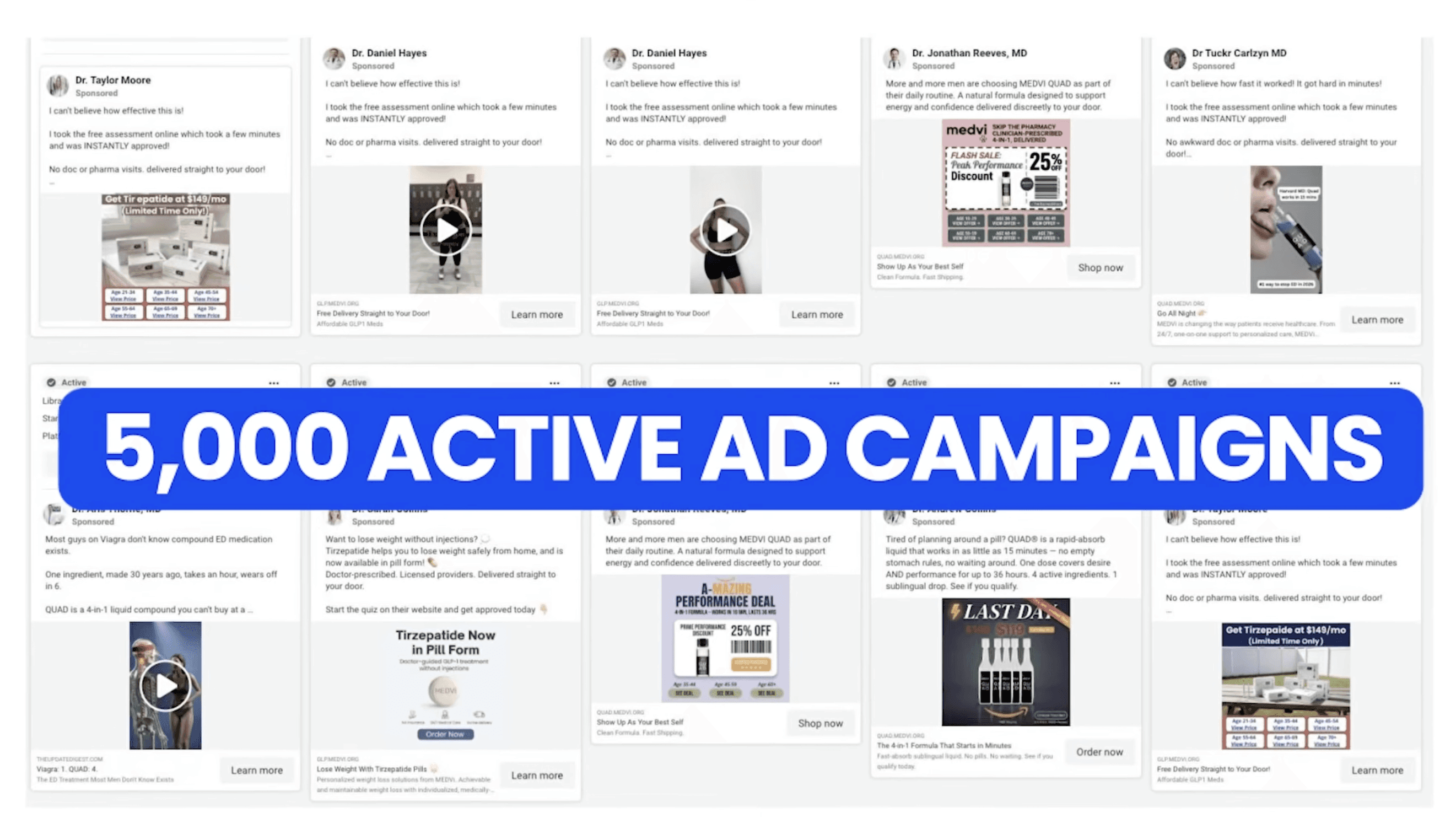
Medvi's growth engine was paid advertising — and it ran at a massive scale. A search of Meta's ad library in April 2026 found over 5,000 active Medvi advertisements running simultaneously.
That is not a typo. Five thousand ads, running at the same time.
The strategy behind this is called creative volume testing. Instead of making one good ad and hoping it works, you flood the platform with dozens (or hundreds) of variations — different headlines, different images, different hooks — and let the algorithm find the winners. Then you kill the losers fast and pour money into what's working.
AI made this possible at a speed and scale that simply wasn't affordable before. Generating 100 ad variations used to take a creative team weeks. Now it takes hours.
Founder Playbook: The Volume Testing Framework
Here's how to apply this to your brand — without a massive ad budget:
Step 1 — Pick one variable to test at a time. Hook (the first 3 seconds or headline), image/video, offer, or landing page. Mixing variables makes it impossible to learn what actually moved the needle.
Step 2 — Generate 10–20 variations of that variable. Use AI to write 15 different ad headlines. Use Stirling to create 10 visual directions. This takes an hour, not a week.
Step 3 — Set a small budget per ad and let them run. Even $5–10/day per variant gives you usable signal within 3–5 days on Meta.
Step 4 — Kill losers at 50% of your target CPA. Double winners. Don't fall in love with creative you liked making. Let the data decide.
Step 5 — Feed what you learn back into new creative. If a hook about "no prescription required" crushed everything else, build 20 more variations on that theme.
The goal isn't to run 5,000 ads. It's to find the 3 ads that do 80% of your revenue — and those only reveal themselves through volume.
3. He Owned the Checkout Experience, Not the Product
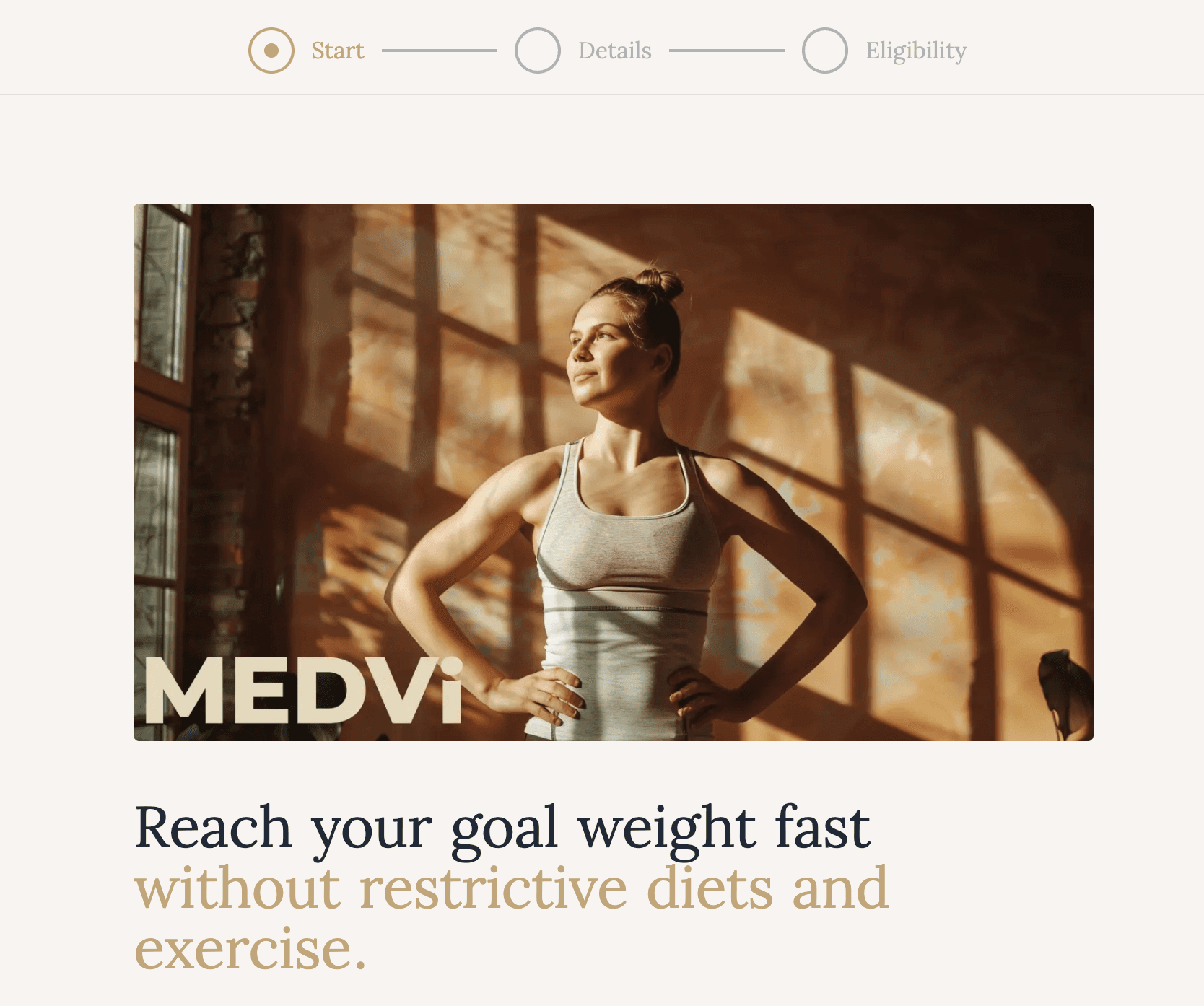
This is one of the most underappreciated parts of Medvi's model. Gallagher didn't try to build a pharmacy, a clinical network, or a drug manufacturing operation. He focused entirely on one thing: getting a customer from "curious" to "converted."
The digital checkout experience — the landing page, the intake form, the offer structure, the pricing — was his product. Everything behind that wall was someone else's infrastructure.
This is essentially a white-label or partnership model, and it's one of the cleanest ways to scale fast in DTC.
Founder Playbook: Map Your Conversion Journey and Kill the Friction
Gallagher obsessed over the path from click to customer. Most founders obsess over the product. Here's how to shift your focus:
Draw your full funnel on paper. Ad → Landing Page → Product Page → Cart → Checkout → Confirmation. Now ask: where are people dropping off? Even a 10% improvement at checkout can outperform doubling your ad spend.
Your landing page is not your homepage. The biggest CRO mistake in DTC is sending paid traffic to a homepage with 12 navigation options. Send it to a dedicated page that does one job: convert for that specific ad's promise.
The offer structure matters as much as the product. Medvi competed in a crowded market by making the buying experience easier than competitors. Think about your own offer: free trial vs. money-back guarantee vs. subscribe-and-save vs. bundling. These are checkout levers that cost you nothing to test.
Use tools to audit your checkout. Hotjar, Microsoft Clarity (free), or FullStory show you session recordings of real users hitting friction points. One afternoon watching these recordings is worth more than a month of guessing.
4. He Built a Lean, Outsourced Operating Model
Here's something most coverage of Medvi missed entirely: Gallagher wasn't running a company — he was running a marketing machine connected to other companies.
CareValidate handled the telehealth-in-a-box infrastructure. OpenLoop Health handled doctors, pharmacies, prescriptions, and compliance. Medvi hired contract engineers and account managers as needed. [4] Gallagher described it as owning "the marketing layer" — and nothing else.
The result? Almost zero fixed overhead. No clinic rent. No pharmacy staff. No compliance team. Just a founder, his brother, and a stack of AI tools — pointed at a massive and hungry market.
Founder Playbook: Build a "Thin Brand, Thick Infrastructure" Model
This model works for far more businesses than people realise. Here's how to think about it:
In DTC physical products: You don't need to own a warehouse. 3PL companies like ShipBob, Whiplash, or Zendbox can store, pack, and ship your orders — often cheaper than doing it in-house once you factor in staff and space. You focus on the brand, the product, and the marketing.
In digital products or SaaS: You don't need to build every feature. Tools like Stripe (payments), Intercom (support), Klaviyo (email), and Recharge (subscriptions) are your infrastructure. Your job is to create the experience that sits on top.
In service businesses: You don't need to deliver everything yourself. Productised services — where the delivery is standardised and can be partially delegated or automated — let you scale without linearly adding headcount.
The question to ask is: "What would I need to own if I had to 10x my customer base tomorrow?" If the answer is "a lot of expensive stuff," you haven't outsourced enough yet.
5. Affiliate Marketing at Scale
One of the more aggressive parts of Medvi's growth was its affiliate marketing network. Affiliates are third parties who promote your product and earn a commission on every customer they send your way.
Medvi reportedly built a large network of affiliates who drove significant traffic to its landing pages. However, this is also where things started to go wrong. A class action lawsuit filed in California in March 2026 alleged that email campaigns with spam-like subject lines (such as "This might be the easiest way to start Ozempic") were routing users to Medvi landing pages through affiliate links — in ways that may have violated California's anti-spam laws.
Gallagher's position was that affiliates operated independently, and that any violations were the affiliates' doing — not Medvi's directly.
Founder Playbook: How to Build an Affiliate Programme That Scales Without Blowing Up
Affiliate marketing is one of the most underused growth channels for DTC brands — and when it's done right, it's pure performance-based growth. Here's how to do it properly:
Start with your best customers, not a random network. Your most passionate buyers are often your best first affiliates. They have real credibility, real audiences, and real reasons to share. A referral programme (Refgrow) is the simplest version of this.
Move to content creators and niche influencers next. Mid-tier influencers (10k–100k followers in your niche) often convert better than big names because their audiences trust them more. Tools like Refgrow, PartnerStack, or Refersion make it easy to track and pay commissions.
Write the rulebook before you launch. Your affiliate agreement should clearly state: what they can and can't say, what claims are allowed, how they must disclose the relationship (FTC requires this), and what the consequences are for violations. This is non-negotiable.
Monitor your affiliates regularly. Set up Google Alerts for your brand name + common affiliate terms. Do quarterly spot-checks on their content. If an affiliate goes rogue, the FTC can still hold you responsible. "I didn't know" is not a legal defence.
Reward performance, not just sign-ups. Structure commissions to incentivise quality customers — not just clicks. Higher commissions for customers who stick around 90 days beats paying for someone who chargeback in week two.
6. Social Proof and Authority Signals
Medvi's website featured a ticker of well-known media logos — Bloomberg, The Times, and others — in a way that implied the company had been featured in those outlets. In reality, Medvi had only advertised on those platforms.
The site also used language like "trusted by experts" and "doctor-approved" — which critics, including the National Consumers League, said was misleading.
This is a classic dark pattern in DTC marketing — one that regulators are increasingly cracking down on.
The irony? The underlying strategy — using social proof to build trust and reduce buying friction — is one of the most powerful and completely legitimate tools available to any brand. Medvi just took a shortcut that created enormous legal risk.
Founder Playbook: Build a Social Proof Engine That Actually Converts
Here's how to build the same trust signals Medvi was going for — without faking anything:
Earn your first press hit strategically. You don't need the New York Times. A feature in one well-respected industry publication — a niche trade blog, a podcast your customers actually listen to — gives you a logo you can display honestly and a quote you can use forever. HARO (Help a Reporter Out) and Qwoted are free tools that connect founders with journalists looking for sources.
Make reviews a system, not a hope. Don't wait for happy customers to leave reviews on their own. Build a post-purchase email sequence (Day 3, Day 7, Day 14) that asks for feedback and guides them to Trustpilot, Google, or your product pages. Tools like Okendo, Yotpo, or Judge.me automate this for Shopify stores.
Video testimonials outperform everything. A 60-second video of a real customer talking about their result is worth 50 text reviews. Use tools like VideoAsk or Testimonial.to to collect these automatically.
Specificity beats superlatives. "Trusted by experts" means nothing. "Used by 12,400 runners training for their first marathon" means something. The more specific your social proof, the more your ideal customer sees themselves in it.
UGC (user-generated content) is the affiliate play done honestly. When real customers post about your product organically, repurpose that content (with permission) in your ads. UGC ads consistently outperform studio-produced content in DTC — because they look real, because they are real.
7. He Picked a Market With Enormous Demand and Low Friction to Buy
One thing almost no one talks about in the Medvi story is the market timing. Gallagher didn't just build a good marketing machine — he pointed it at one of the fastest-growing consumer health markets in a generation.
GLP-1 medications saw explosive demand from 2023 onwards, with millions of people actively searching for affordable access. The traditional healthcare system was slow, expensive, and hard to navigate. Medvi made it easy.
The product-market fit was already there. Medvi just built the fastest on-ramp to it.
Founder Playbook: How to Find and Validate Your Own "GLP-1 Moment"
Every few years, a shift in consumer behaviour creates a window where the market is growing faster than supply can keep up. Founders who move early in those windows often win big — even if their execution isn't perfect. Here's how to spot them:
Watch search trends, not just social trends. Google Trends shows you what people are actively looking for — not just what they're scrolling past. A rising search curve for a problem your product solves is one of the most reliable early signals.
Look for markets where buying is currently painful. Medvi won not because its product was better than Hims & Hers — but because it made the buying experience faster and simpler. Wherever consumers are frustrated with how hard it is to get something, there's a DTC opportunity.
Validate before you build. Before Gallagher had a product, he could have built a simple landing page, driven a few hundred dollars of traffic to it, and measured how many people clicked "buy." That kind of smoke test costs $200 and saves months of building in the wrong direction.
The fastest growing markets attract the most competition. The lesson isn't to ride every hot trend. It's to find the intersection of a growing demand curve and a defensible angle — your brand voice, your community, your supply chain advantage, your niche within the niche.
The Controversy: Where Things Went Sideways
No honest case study on Medvi can skip this part.
Within 24 hours of the NYT profile going viral, investigators started digging. What they found raised serious questions:
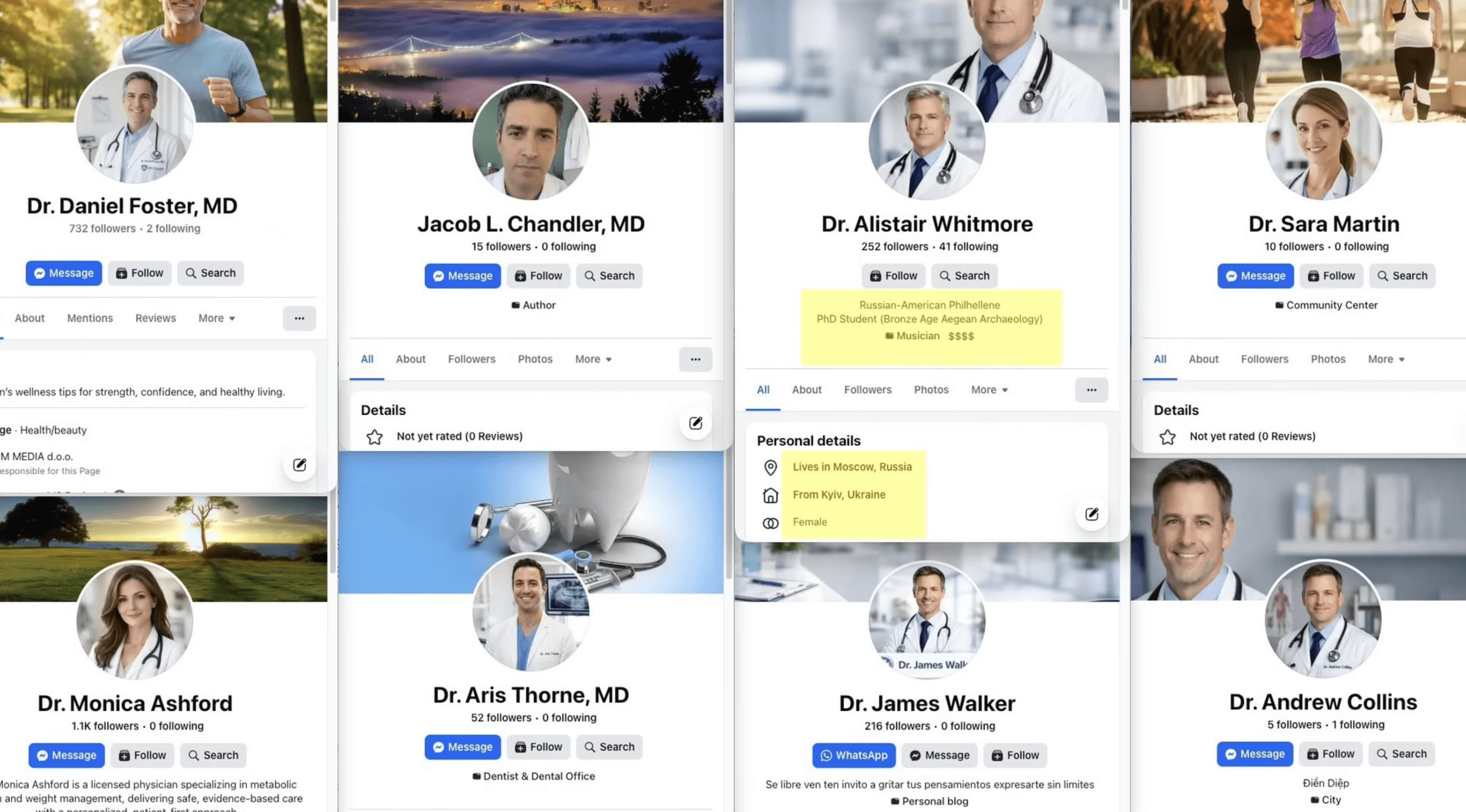
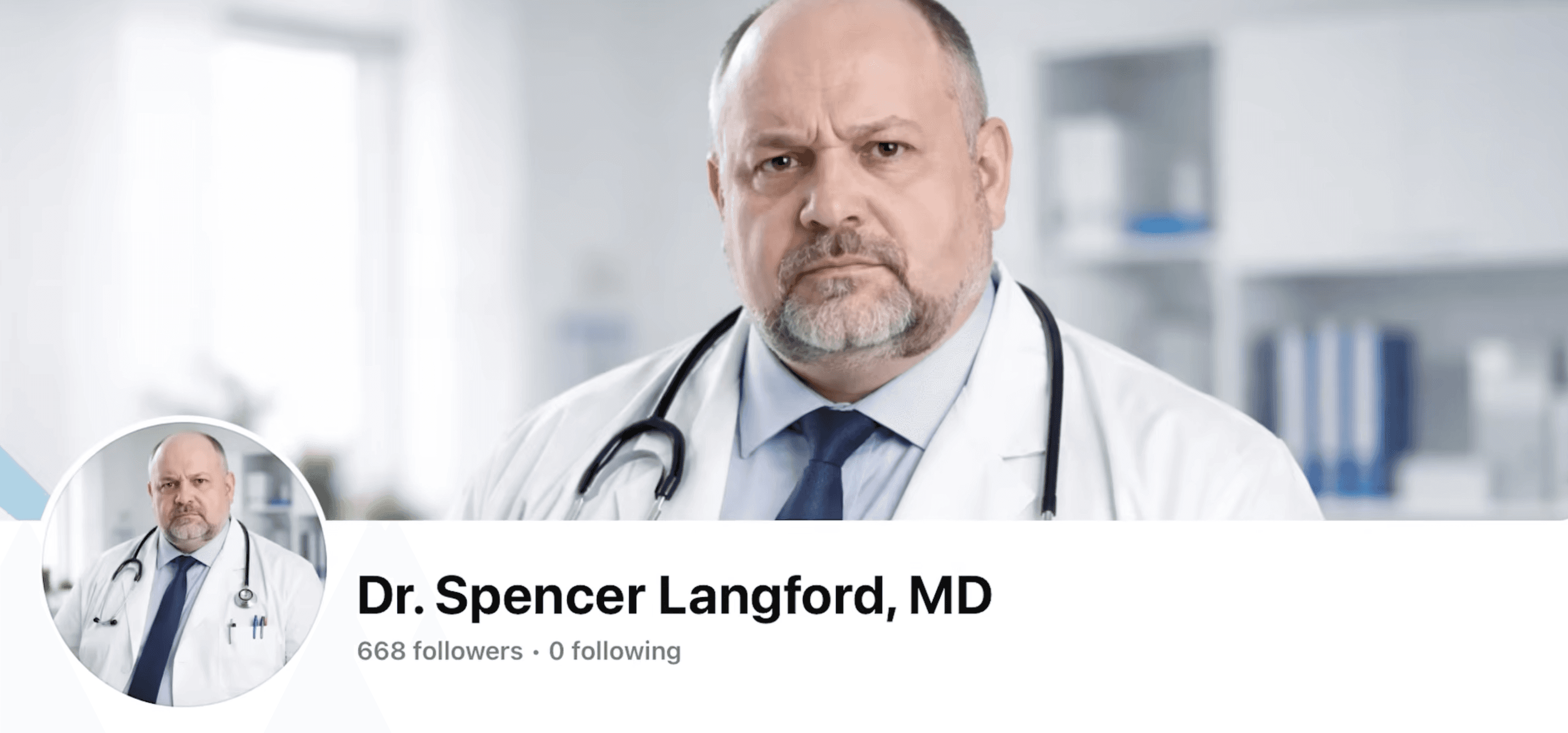
Alleged fake doctor profiles: Researchers found what appeared to be over 800 Facebook accounts posing as doctors, all advertising Medvi products. One "Dr. Robert Whitworth" listed an address in Cameron, Montana — a place that doesn't appear to exist. Another profile had ties to a gospel band and an Angolan phone number.
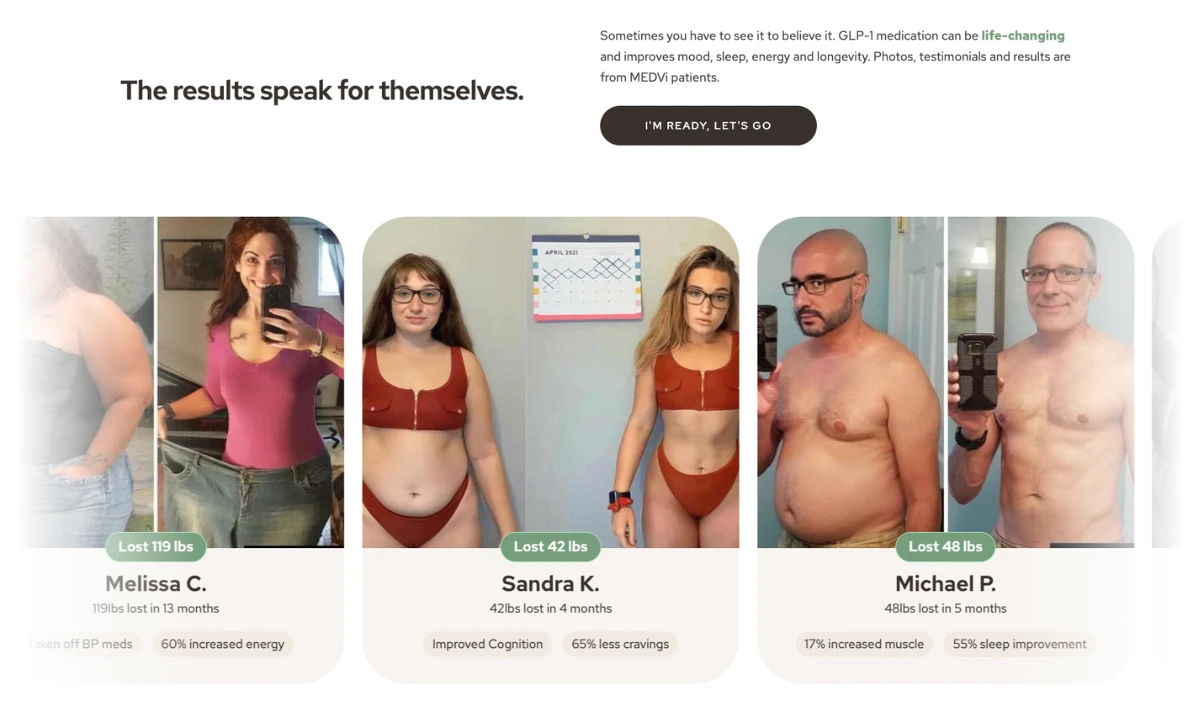
AI-generated before-and-after images: Futurism had already reported in 2025 that Medvi's ads used what appeared to be AI-generated deepfake images of patients — fake weight-loss transformations designed to look real.
FDA Warning Letter: On February 20, 2026 — six weeks before the NYT profile ran — the FDA sent a warning letter identifying violations including misbranding and claims of FDA approval that were not accurate. Gallagher says the letter was directed at an affiliate's domain (medvi.io), not Medvi's primary site (medvi.org). [9]
Data breach: Medvi's clinical partner OpenLoop Health suffered a serious cyberattack in early 2026, with a threat actor claiming to have accessed records from approximately 1.6 million patients.
Gallagher's public response acknowledged some issues while pushing back on others. He stated: "Building a company the size of MEDVi and scaling so quickly involves many learning moments. At each of these stages, I have course-corrected immediately and appropriately."
Whether that's enough remains to be seen. Legal battles and regulatory scrutiny are ongoing.
Founder Lesson: Trust Is a Moat — And It Takes Years to Build, Minutes to Lose
The most expensive thing about Medvi's alleged shortcuts isn't the lawsuits, the FTC scrutiny, or the FDA letters. It's the permanent damage to trust at scale. When 500,000 customers find out they may have been influenced by fake before-and-after photos and invented doctor personas, that relationship is almost impossible to repair.
For founders building ethical brands, this is actually your competitive advantage — not just your ethical obligation. In a world where AI makes fakery cheap and easy, authentic brands will stand out more, not less. Your real customer results, your genuine reviews, your actual founder story — these are becoming rarer, which makes them more valuable.
Build the real thing. Document it obsessively. Share it loudly.
The Bigger Picture: What This Means for DTC Founders
Here's the truth that Medvi's story reveals — stripped of all the noise:
The economics of building a business have changed permanently.
A single founder with a clear market, modern AI tools, and a smart outsourcing strategy can now compete at a level that used to require millions in capital and dozens of employees. The infrastructure is available. The tools are cheap. The playbook exists.
But speed without guardrails is a liability.
Medvi's story shows exactly what happens when growth becomes the only goal — when testing moves faster than trust can be built, when affiliates run wild, when shortcuts are taken on the most sensitive thing there is: people's health.
The founders reading this are building ethical businesses. Which means you get to take the most powerful lessons from this story — AI leverage, volume testing, lean infrastructure, affiliate scale, checkout obsession — and build something that doesn't need to cut corners to win.
That's not just a moral position. It's a smarter long-term business strategy.
The Full Playbook: All Lessons in One Place
Here's every lesson from this case study — a checklist you can actually use.
On AI and Operations
Build your AI operating system before your first hire. Identify which roles AI can cover at 80% quality for 5% of the cost.
Use AI for speed-to-test, not just speed-to-publish. The real superpower is how fast you can iterate.
Keep humans in charge of judgment, relationships, and compliance. AI handles execution; you own the strategy.
On Paid Advertising
If you're running fewer than 10 ad variants, you're not testing — you're guessing. Use AI tools to generate creative volume cheaply.
Test one variable at a time: hook, visual, offer, or landing page. Mixed variables produce unreadable data.
Kill losing ads at 50% of your target CPA. Sentiment doesn't scale. Data does.
On Business Model
Map your value chain and identify what you should own versus outsource. The best DTC founders own the customer relationship — and little else.
Use 3PLs, white-label partners, and API-driven platforms to handle the infrastructure. Your energy is too valuable to spend on warehouses and compliance.
Build your checkout like it's your product. Because for your customer, it is.
On Affiliates
Start with your best customers as affiliates before going to cold networks.
Write a clear affiliate agreement before you launch. Include disclosure requirements, claim restrictions, and enforcement terms.
Audit affiliate activity quarterly. You are responsible for what they say about your brand, whether you wrote it or not.
On Social Proof
Earn your press through HARO, podcasts, and niche publications — then display it honestly.
Automate your review collection with post-purchase email sequences. Don't wait for happy customers to find you.
Collect video testimonials. They convert better than anything else in DTC, and they're nearly impossible to fake.
Use UGC in your paid ads. Real customers talking about real results is your most powerful and most defensible creative asset.
On Market and Brand
Find your "GLP-1 moment": a growing demand curve, a painful buying experience, and a gap you can fill faster than the incumbents.
Validate before you build. A $200 smoke test beats three months of building in the wrong direction.
Authenticity is a moat. In an era of AI-generated everything, the brands with real stories, real results, and real community will win — and regulators will increasingly force it.
References
The New York Times – "A $1.8 Billion Company With Just Two Employees? In the Age of AI, It's Increasingly Possible." April 2, 2026. https://www.nytimes.com
Masad, Amjad – LinkedIn Post. April 2026. https://www.linkedin.com/posts/amjadmasad
Vyacheslav, Eric – LinkedIn Post. April 2026. https://www.linkedin.com/posts/eric-vyacheslav
HealthDataConsortium.org – "MEDVi FDA Warning Letter and $1.8 Billion NYT Profile: The Full Story." April 2026. https://healthdataconsortium.org/medvi-telehealth/
Crevio.co – "One-Person Billion-Dollar Company: How Medvi Did It (2026)." https://crevio.co/blog/one-person-billion-dollar-company
Medium / Catterrr – "Medvi: The $1.8B Startup With Zero Employees." April 2026. https://medium.com/@bhetamaranatha/medvi
Moneywise – "Allegations Against $1.8 Billion Medvi Piling Up." April 2026. https://moneywise.com/news/top-stories
eMarketer – "Fake Doctor Ads Fuel Scrutiny of GLP-1 Marketer." April 2026. https://www.emarketer.com/content/fake-doctor-ads-fuel-scrutiny-of-glp-1-marketer
Futurism – "AI-Powered Drug Marketer Medvi Responds After Allegations About Fake Doctors and Patients." April 2026. https://futurism.com/artificial-intelligence/ai-drug-marketer-medvi-responds
Drug Discovery & Development – "The New York Times Spotlighted MEDVi. The FDA Had Already Warned the Self-Proclaimed 'Fastest Growing Company in History.'" April 2026. https://www.drugdiscoverytrends.com
News Anyway – "MEDVi's Billion-Dollar Lie: How a Two-Man Telehealth Startup Built an Empire on Fake Doctors." April 2026. https://www.newsanyway.com
Forrester Research – "Beware the Magical Two-Person, $1 Billion AI-Driven Startup." April 6, 2026. https://www.forrester.com/blogs
Written April 2026 | For educational purposes only. All factual claims are sourced from the references above. Some allegations referenced in this article are unverified or contested and should be understood as alleged, not proven.

Turn Your Product Link Into 12 Winning Ads
Just paste your URL. Stirling’s AI reads your site, finds your best hooks, and builds high-converting ads in 60 seconds.